
A Simple Guide to Understanding Daily Matka Updates
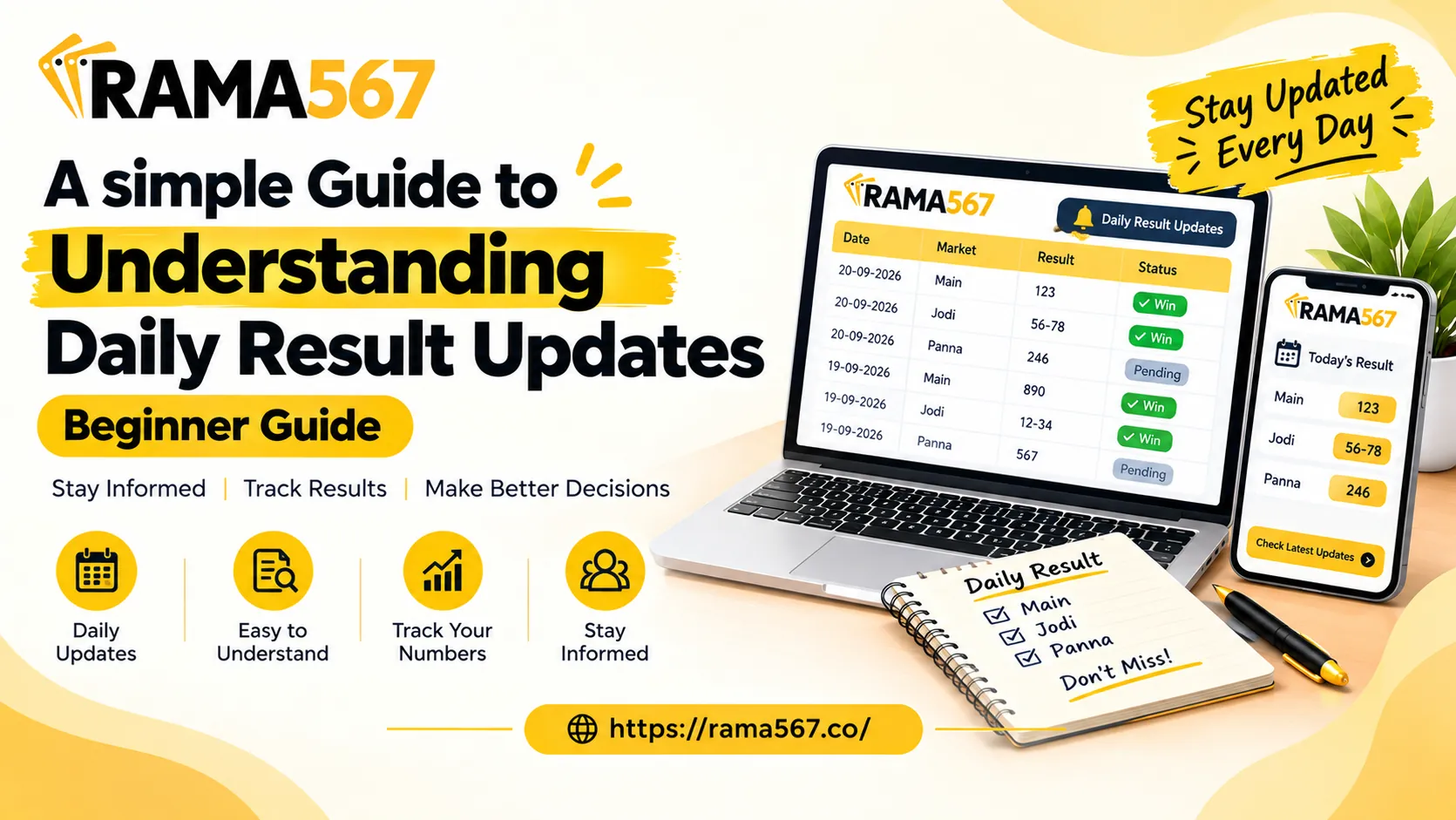
Navigating online information can be daunting—especially when you land on a page full of multiple dates, tables, numerical grids and unfamiliar terms. Looking for daily result updates can become a confusing process for beginners who stumble across pages with today's posts mixed in with previous weeks' entries, historical charts, and category headers that fail to specify why information appears grouped together.
Knowing how to interpret this data depends on understanding how different websites categorize the data they display. Whether you are reviewing public figures, historical archives or daily logs, learning what to look for makes all the difference.
This simple, step-by-step guide aims to offer an overview of Daily Matka Updates, how to read date-wise information clearly, avoid common reading mistakes and browse online result portals safely and responsibly.
What Are Daily Matka Updates?
From an informational standpoint, daily updates are the routine records, time stamped tables, and published logs that are listed on informational result portals. Derived from an offline draw system, today the term generally refers to the way independent digital platforms display daily numbers and historical archives.
| Daily Result Information | Details |
|---|---|
| Daily Results & Timestamps | Shows daily results along with their recorded times |
| Date-Wise Archives | Organizes past results according to their dates |
| Historical Grid Records | Displays older results in an organized grid format |
| Clear & Organized Data | Brings the information together in an easy-to-follow format |
When browsing a website that publishes these daily updates, you will generally notice a few common sections onscreen:
- Live Daily Feeds: Newly posted entries tagged with specific timed dates.
- Date-Wise Archives: Organized lists to allow visitors to review past records by selecting a calendar date.
- Historical Records: Tables that compile daily entries over weeks or months into date-organized grid records.
- Category Headers: Category labels that specify draw times or market names.
Because every website uses slightly different layouts, knowing how to interpret these general elements keeps you from confusing today's posts with previous records.
Why Daily Result Updates Can Be Confusing for Beginners
When first navigating online updates, it's completely natural to feel a little lost at first. Pages often contain plenty of numerical data that is presented in a compact layout.
Here are the most common reasons that beginners face confusion
- Overlapping Dates: Many sites feature past records and new entries on the same page, which makes it easy to mistake yesterday's archive for today's listing.
- Unclear Category Titles: Different platforms often use slightly varied titles for the same draw times or market categories.
- Unfiltered Display Grids: Tables for historical records sometimes list dozens of entries without highlighting the latest postings.
- Outdated or Mirrored Pages: Third party websites sometimes showcase copied or delayed information that does not reflect actual publication dates.
Knowing that these common layout variations exist is the first step in learning to read daily result updates.
How to Read a Daily Result Update
To avoid confusion, always try using this 5-step method of reading any result page:
1. Always Check the Date First
Before looking at any numbers, look to ensure that the calendar date shown on the header or table cells matches your expectations. Never assume that a web posting reflects today's data just because the page was opened on this day.
2. Identify Which Category You Need
Look for the appropriate category or market heading to ensure that you are reading the right informational area. Pay special attention to ensure that you are not reading an outdated section.
3. Look Carefully at the Information Displayed
Review the numbers in order while reading the labels and formatting to understand which digits correspond to what time frame or section. Note how a platform displays its digits, whether as single numbers, pairs, or three-digit sets.
4. Compare With Historical Records
If you need to verify an older entry, look to cross-reference it from the site's historical record. Remember that historical records are only used to reflect what happened and should never be used to guess what may happen in the future.
5. Always Ensure that You're at a Verified Source
To ensure accuracy, always remember to browse at a direct website. Avoid visiting mirrored or untrusted third party sources that may provide inaccurate information.
Understanding Date-Wise Result Information
Date-wise organization is vital to any information portal, as it ensures that all records are tied to specific points in time.
| Information Type | What It Shows | Primary Purpose |
|---|---|---|
| Current Update | The latest entry published for the today's date | Showcase live daily postings |
| Previous-Day Record | Entries logged over the past 24-48 hours | Verify recent historical posts |
| Historical Archive | Grid records that span weeks, months, or years | Provide a searchable reference |
When browsing date-wise lists, always make sure that your browser page is fully loaded. On some mobile screens, long list tables can appear to show older rows before the current header loads. Understanding how portals organize information is easier by referring to guides on clear navigation on online result websites.
Current Update Versus Historical Information
One of the most common errors that beginners make is not distinguishing between current updates and historical information.
| Data Classification | Current Update | Historical Archive |
|---|---|---|
| Timing | Timed for today | Historically tagged |
| Status | Freshly published | Static database |
| Type | Real-time entry | Documented log |
A current update is a record that is published for a specific, on-going time today. Once that period passes, a record becomes uploaded into a website's permanent storage.
A historical listing is a database of past entries that a website maintains. These are useful for cross-referencing purposes, but not for indicating potential future outcomes. It is important to remember that past results never predict or affect future draws.
How to Find Daily Updates on an Online Result Website
Well-designed result portals generally provide a few simple options to help you find the update that you are specifically looking for:
- Top Navigation Bar: Look to find tab links for "Today's Results", "Daily Updates" or "Archives".
- Category Boxes: Some homepages provide current updates in well organized, clickable panels grouped by time or market name.
- Search & Filter Bars: Look for advanced search bars that allow you to pick a date from a calendar dropdown menu.
- Footer Archives: If previous records cannot be found on the homepage, look at the website's footer to find links to monthly and yearly archives.
Exploring a transparent online results portal is always an easy process when using common navigation bars.
Common Mistakes When Checking Daily Result Updates
Even experienced readers sometimes overlook simple errors when looking for numbers online. Here are common mistakes and solutions:
Mistake: Trusting information found on unofficial screenshots
Solution: Always try to visit a direct site that provides the records online
Mistake: Treating charts as if there are predictable patterns
Solution: Treat charts as historical records and never use them as a reference for expecting future outcomes
Mistake: Skipping over the date verification step entirely
Solution: Make checking the date one of the first things you do when opening a result information page
Mistake: Clicking pop-up advertisements to find "hidden" daily updates
Solution: Follow the official website's menu navigation to look for any daily result sections
Learning how to spot common pitfalls is a great way to improve your browsing habits. For more insights on reviewing archives, consider reading our guide on Matka number patterns and historical records.
How to Evaluate a Daily Result Information Page
Check out this simple practical guide to evaluating whether pages present their contents clearly:
- Is the calendar date stated prominently above the daily results table?
- Are category labels clear and easy to read?
- Is current information separated from historical records?
- Does the page load clearly on mobile devices without confusing text overlaps?
- Does the site make unrealistic claims or promises of guaranteed results?
- Are privacy policies and contact links clearly stated in the website's footer?
If a website scores well on these indicators, then it provides quality information design. Following responsible, ethical information publishing is always a great way to ensure transparency.
Safety Tips When Checking Daily Updates Online
Staying safe while browsing public information portals is always easy when you follow common digital hygiene steps:
- Check the URL: Visit a website that utilizes https:// and ensure it reflects the correct address you intended to visit
- Never Download Unknown Files: Avoid clicking links that encourage you to download unexpected apk or .exe file formats on your phone or computer
- Keep Personal Info Private: Simple browsing of public log tables never requires you to share your phone number, address, or banking details
- Use An Updated Browser: Keep your web browser up to date so that its filters can block harmful pop-up content
Following basic online gaming safety practices keeps your computing device secure while searching for information.
Responsible Usage of Daily Result Information
Spending time online browsing and searching for updates should always be a controlled activity. It's easy to get caught up checking through long daily records and scrolling through tables on a repeated basis throughout the day.
Best Practices for Healthy Browsing
- Set Clear Time Limits: Decide in advance what time you decide to leave browsing and follow your guidelines
- Take Scheduled Breaks: Step away from your computer or phone screen periodically to keep your eyes refreshed. Learn more about taking healthy browsing breaks.
- Maintain Balance: Avoid checking portals at the expense of work, family time, or personal sleep schedules. Consider setting personal online limits to help maintain a healthy daily balance
- Observe Local Regulations: Always follow regional regulations and age restrictions relating to online platforms
Also Read: Day Market vs Night Market: Understanding the Difference
Conclusion
Understanding daily updates is not an intimidating task. By developing simple habits such as verifying dates, identifying categories, separating daily posts from historical archives, and browsing safe websites, you'll find that browsing online result portals is a simple process.
Remember that all numerical charts reflect past events and should always be regarded as static records. Stay mindful of your time, follow online safety steps, and use reliable informational resources whenever you review Daily Matka Updates.
Frequently Asked Questions
1. What are daily Matka updates?
These are published records, tables, and logs that showcase daily numbers and historical archives on information websites.
2. How can beginners understand date-wise result information?
Beginners should always look at the page header to verify the calendar date first, identify the category title, and read the table row by row without assuming old entries apply to today.
3. What is the difference between a daily update and historical information?
A daily update indicates the entry published for the current date, whereas historical information contains past records that are stored in a searchable database for reference.
4. Can historical results predict future outcomes?
No. All historical records showcase what was logged in the past, and they are static records that never guarantee or predict future draw outcomes.
5. How can I stay safe when checking result information online?
Stay safe by checking the site's URL, avoiding unknown app downloads, keeping personal details private, and using a modern browser with built-in security features.