Table of Contents
- Introduction: The Two-Act Play of Indian Numbers Gaming
- The Dual-Session Architecture: Why Every Market Has Two Draws
- Deconstructing the Open Bid: Rules, Formats & Deadlines
- Deconstructing the Close Bid: Rules, Formats & Deadlines
- The Strategic Bridge: Half Sangam & Full Sangam Dynamics
- Master Comparative Matrix: Open Bids vs. Close Bids at a Glance
- Step-by-Step Guide: Placing Open and Close Bets on the Rama567 App
- Tactical Play: Leveraging the Intermission for Risk Hedging
- Debunking Common Myths About Open and Close Draws
- Conclusion & Responsible Gaming Discipline on Rama567
1. Introduction: The Two-Act Play of Indian Numbers Gaming
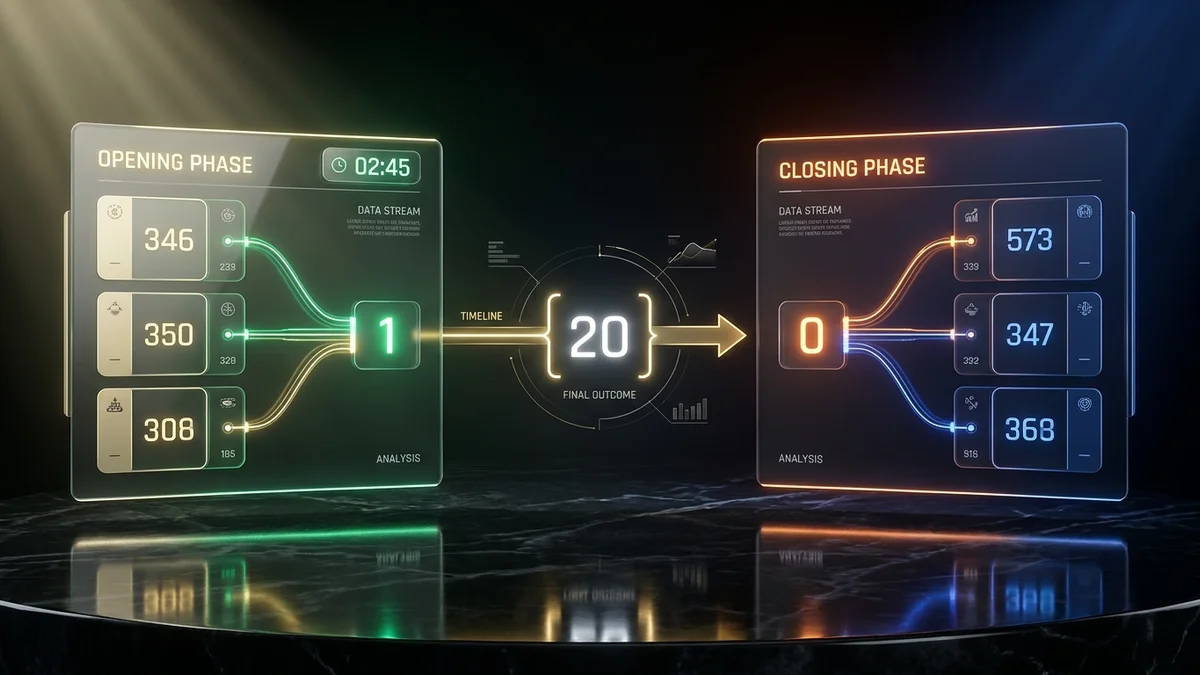
For newcomers entering the world of Indian Matka, the first structural feature that stands out on digital scoreboards and record charts is that every single market—whether it is Kalyan Day, Time Bazar, Supreme Night, or Karnataka Day—operates in two distinct, sequential acts.
Unlike Western lotteries (such as Powerball or EuroMillions) where all winning numbers are extracted in a single instantaneous drawing ceremony, Indian Matka unfolds across an Open session and a subsequent Close session, separated by an active intermission.
+---------------------------------------------------------------------------------------------------+
|                            THE TWO-ACT ARCHITECTURE OF AN INDIAN MATKA MARKET                     |
+---------------------------------------------------------------------------------------------------+
|                                                                                                   |
|  [ ACT I: THE OPEN SESSION ]                                                                      |
|  - Bidding Window: From market opening until Open Cut-Off Lock (10–15 mins before declaration)    |
|  - Result Declared: 3-Digit Open Panna (e.g. 148) ---> Sum Modulo 10 = Open Single Ank [ 3 ]     |
|                                                                                                   |
|  ================================== THE INTERMISSION WINDOW ====================================  |
|  - Duration: 60 minutes (Fast Bazars) to 120+ minutes (Classic Bazars)                            |
|  - Strategic Evaluation: Analysts study declared Open Ank, calculate Cut Anks, plan Close hedges  |
|                                                                                                   |
|  [ ACT II: THE CLOSE SESSION ]                                                                    |
|  - Bidding Window: Open declaration until Close Cut-Off Lock (10–15 mins before declaration)      |
|  - Result Declared: 3-Digit Close Panna (e.g. 279) ---> Sum Modulo 10 = Close Single Ank [ 8 ]    |
|                                                                                                   |
|  [ FINAL COMPOSITE SYNTHESIS: 148 - 38 - 279 ]                                                    |
|  - Tens Digit = Open Ank [ 3 ]                                                                    |
|  - Units Digit = Close Ank [ 8 ]                                                                  |
|  - Together, they seal the complete Two-Digit Jodi [ 38 ]                                         |
+---------------------------------------------------------------------------------------------------+
Understanding the precise differences between an Open Bid and a Close Bid—their timing rules, permissible bet formats, mathematical odds, and payout structures—is the absolute foundation of successful, disciplined play.
On Rama567, our user interface cleanly separates the Open and Close betting workflows, providing transparent countdown clocks, sub-second result feeds, and instant UPI payouts. This step-by-step master guide demystifies the mechanics of Open versus Close bids for beginners and experienced analysts alike.
2. The Dual-Session Architecture: Why Every Market Has Two Draws
To grasp why modern markets like Kalyan or Main Bazar have two distinct draws, one must examine both their commercial history and their underlying mathematical elegance.
Historical Roots in Commodity Opening and Closing Rates
As documented in our comprehensive history of Old Main Mumbai, Matka did not originate as a casino game; it began in the 1950s as informal wagering on the opening and closing cotton rates transmitted via teleprinter from the New York Cotton Exchange (NYCE) to the Bombay Cotton Exchange in Sewri.
Commercial commodity exchanges worldwide operate with two benchmark prices every trading day:
- The Opening Bell Rate: The price established during the first market trades of the morning.
- The Closing Bell Rate: The final settlement price settled when the trading floor closes for the day.
When pioneers Kalyanji Bhagat and Ratan Khatri digitized and codified the game in the 1960s using clay pots and playing cards, they deliberately preserved this Open and Close structure. It gave the market narrative tension, distinct trading sessions, and an intermission period where participants could settle morning accounts and formulate evening strategies.
The Universal Scoreboard Syntax: [ Open Panna ] - [ Jodi ] - [ Close Panna ]
Every market result published on Rama567's Historical Charts is formatted in a standardized 8-digit composite scoreboard:
$\underbrace{d_1 d_2 d_3}{\text{Open Panna}} - \underbrace{X Y}{\text{Jodi}} - \underbrace{d_4 d_5 d_6}_{\text{Close Panna}}$
Let us take the real-world example: 148 - 38 - 279
148(Open Panna): The three digits drawn in the Open session, sorted in ascending order ($1 \le 4 \le 8$).3(Open Single Ank): The digital sum of the Open Panna: $(1 + 4 + 8) = 13 \equiv \mathbf{3} \pmod{10}$.279(Close Panna): The three digits drawn in the Close session, sorted in ascending order ($2 \le 7 \le 9$).8(Close Single Ank): The digital sum of the Close Panna: $(2 + 7 + 9) = 18 \equiv \mathbf{8} \pmod{10}$.38(Jodi Bracket): The synthesis of the Open Ank ($3$) and Close Ank ($8$), forming the two-digit bracket.
Mathematical Independence of the Two Draws
A fundamental mathematical theorem of Indian Matka is that the Open draw and Close draw are completely independent random events.
In probability theory, two events $A$ and $B$ are independent if:
$P(B \mid A) = P(B)$
The declaration of Open Panna 148 (Ank 3) has zero mathematical influence on what Close Panna will be drawn two hours later. The probability of the Close Ank being any digit $k \in {0, 1, \dots, 9}$ remains strictly uniform at:
$P(\text{Close Ank} = k) = \frac{1}{10} = 10.0%$
Recognizing this independence protects players from fallacious reasoning (such as assuming that an odd Open number must be followed by an even Close number).
3. Deconstructing the Open Bid: Rules, Formats & Deadlines
An Open Bid refers to any wager submitted during the initial phase of the market before the Open draw occurs.
+------------------------------------------------------------------------------------+
|                         THE OPEN BIDDING TIMELINE                                  |
+------------------------------------------------------------------------------------+
|                                                                                    |
|  [ MARKET OPENS FOR BETTING ]                                                      |
|  (Usually early morning or several hours prior to the draw)                        |
|         |                                                                          |
|         v                                                                          |
|  [ OPEN BIDDING WINDOW ACTIVE ]                                                    |
|  Players submit: Open Single Ank, Open Pannas (SP/DP/TP), Full Jodis, Full Sangams |
|         |                                                                          |
|         v                                                                          |
|  [ PRE-DRAW OPEN CUT-OFF LOCK (T-15 MINUTES) ]                                     |
|  Interface seals. Cryptographic snapshot logged. Zero new bets accepted.           |
|         |                                                                          |
|         v                                                                          |
|  [ OPEN DECLARATION ]                                                              |
|  Winning Open Panna & Open Single Ank broadcast across platform in <400ms.         |
|                                                                                    |
+------------------------------------------------------------------------------------+
The Open Bidding Window and NTP Cut-Off Lock
The Open bidding window opens hours in advance, allowing players to analyze charts and construct their slips at leisure.
- However, every market enforces an automated NTP Pre-Draw Cut-Off Lock.
- Exactly 10 to 15 minutes before the official Open declaration, the bidding window engages its cryptographic seal.
- For example, if Supreme Day declares Open at 03:35 PM IST, the Open bidding interface locks down permanently at 03:20 PM IST.
Permissible Open Wagering Formats
During the Open window, players can place wagers across five primary categories:
- Open Single Ank: Predicting the single digit ($0$ through $9$) that will emerge from the Open Panna sum. Pays 1:9.5 on Rama567.
- Open Single Panna (SP): Predicting the exact 3 unique ascending digits of the Open draw (e.g.,
148). Pays 1:160. - Open Double Panna (DP): Predicting an Open draw containing two repeating digits (e.g.,
225). Pays 1:320. - Open Triple Panna (TP): Predicting an Open draw of three identical digits (e.g.,
333). Pays 1:700. - Full Jodi Bracket ($00$–$99$): Predicting the complete combined two-digit number. Pays 1:95.
- Full Sangam: Predicting both the exact Open Panna and Close Panna simultaneously. Pays 1:10,000.
Why Jodi and Full Sangam Must Be Placed Before Open
A common question from beginners is: "Why can't I place a Jodi bet after I see the Open number?"
The answer lies in basic combinatorial logic:
- A Jodi is a two-digit bracket spanning 100 possible outcomes ($00$ through $99$).
- Before the Open draw occurs, there are 100 equally probable outcomes ($1%$ probability), justifying Rama567's high 1:95 payout rate.
- Once the Open Ank is declared as
3, ninety of the hundred possibilities are eliminated instantly! Only ten combinations remain (30, 31, 32, 33, 34, 35, 36, 37, 38, 39). - If platforms allowed players to bet on Jodis after the Open was known, a Jodi bet would simply be an ordinary Single Ank bet on the Close digit. Therefore, all Jodi and Full Sangam slips must be registered and locked during the Open bidding window.
4. Deconstructing the Close Bid: Rules, Formats & Deadlines
Once the Open draw concludes and winning Open tickets are settled, the market enters its second act: the Close Session.
+------------------------------------------------------------------------------------+
|                         THE CLOSE BIDDING TIMELINE                                 |
+------------------------------------------------------------------------------------+
|                                                                                    |
|  [ OPEN RESULT DECLARED ] (e.g., 04:10 PM for Kalyan Day)                          |
|         |                                                                          |
|         v                                                                          |
|  [ THE INTERMISSION WINDOW OPENS (04:11 PM - 05:55 PM) ]                           |
|  - Open digit is verified and publicly displayed on scoreboard: [ 3 ]              |
|  - Close tab in app unlocks for active bidding                                     |
|  - Permissible formats: Close Single Ank, Close Pannas (SP/DP/TP), Half Sangam     |
|         |                                                                          |
|         v                                                                          |
|  [ PRE-DRAW CLOSE CUT-OFF LOCK (T-15 MINUTES, e.g., 05:55 PM) ]                    |
|  Close bidding interface seals. Zero new bets accepted.                            |
|         |                                                                          |
|         v                                                                          |
|  [ CLOSE DECLARATION (06:10 PM) ]                                                  |
|  Close Panna & Close Ank declared -> Final Jodi sealed -> Instant settlement.      |
|                                                                                    |
+------------------------------------------------------------------------------------+
The Intermission Window: The Eye of the Storm
The period separating Open declaration from the Close cut-off is known as the Intermission Window:
- In fast markets like Sridevi Day and Karnataka Day, the intermission lasts 45 to 60 minutes.
- In classic markets like Kalyan Day and Supreme Day, the intermission spans a generous 105 to 120 minutes.
This intermission is not empty downtime; it is the most analytically active window of the gaming day.
The Close Bidding Window and Pre-Close NTP Cut-Off Lock
Just like the Open session, the Close session enforces an immutable pre-draw cut-off lock:
- Bidding for the Close session seals 15 minutes before the scheduled Close declaration.
- In Kalyan Day (Close declares at 06:10 PM), Close bidding closes permanently at 05:55 PM IST.
- As detailed in our guide on How Push Notifications Keep You Ahead of Deadlines, Rama567 dispatches automated alerts at T-15 and T-5 minutes to ensure you never miss the Close deadline.
Permissible Close Wagering Formats
During the Close session, players can place wagers on:
- Close Single Ank: Predicting the terminal unit digit ($0$–$9$) of the Close Panna sum. Pays 1:9.5.
- Close Single Panna (SP): Predicting the 3 unique ascending digits of the Close draw. Pays 1:160.
- Close Double Panna (DP): Predicting a Close draw containing two repeating digits. Pays 1:320.
- Close Triple Panna (TP): Predicting a Close draw of three identical digits. Pays 1:700.
- Type A Half Sangam: Pairing the already-declared Open Panna with your predicted Close Ank. Pays 1:1,000.
Why Standard Jodi Bids Are Prohibited During Close
As explained above, because the Open Ank is already declared and visible on the scoreboard, accepting new 100-bracket Jodi bets during the Close window is mathematically impossible.
However, players who wish to target the final two-digit outcome can do so by wagering on the Close Single Ank—which carries the exact same 10% probability as guessing the second digit of the Jodi!
5. The Strategic Bridge: Half Sangam & Full Sangam Dynamics
The structural interplay between Open and Close reaches its highest mathematical expression in Sangam betting.
A "Sangam" (literally meaning confluence or union) represents a compound wager that links Panna panels with Single Anks across both sessions.
+---------------------------------------------------------------------------------------+
|                    THE SANGAM STRUCTURAL TAXONOMY (RAMA567)                           |
+---------------------------------------------------------------------------------------+
|                                                                                       |
|  [ TYPE A HALF SANGAM ]                                                               |
|  Formula:      [ Open Panna ]  +  [ Close Ank ]                                       |
|  Timing:       Can be placed DURING the Intermission (Open Panna already known!)      |
|  Sample Pool:  220 Pannas x 10 Anks = 2,200 Combinations                              |
|  Payout Rate:  1 : 1,000  (Rs 100 stake pays Rs 1,00,000)                             |
|                                                                                       |
|  [ TYPE B HALF SANGAM ]                                                               |
|  Formula:      [ Open Ank ]    +  [ Close Panna ]                                     |
|  Timing:       Must be placed BEFORE Open Cut-Off Lock                                |
|  Sample Pool:  10 Anks x 220 Pannas = 2,200 Combinations                              |
|  Payout Rate:  1 : 1,000  (Rs 100 stake pays Rs 1,00,000)                             |
|                                                                                       |
|  [ FULL SANGAM ]                                                                      |
|  Formula:      [ Open Panna ]  +  [ Close Panna ]                                     |
|  Timing:       Must be placed BEFORE Open Cut-Off Lock                                |
|  Sample Pool:  220 Pannas x 220 Pannas = 48,400 Combinations                          |
|  Payout Rate:  1 : 10,000 (Rs 100 stake pays Rs 10,00,000)                            |
|                                                                                       |
+---------------------------------------------------------------------------------------+
Type A Half Sangam: Open Panna + Close Ank
Type A Half Sangam is one of the most widely played advanced formats on Rama567:
- Because the Open Panna is already declared at the start of the intermission, half of the wager is already certified!
- The player only needs to predict the single Close Ank to complete the equation.
- For example, if Open declared
148, you place a Type A slip specifying148 x 8. If the Close Ank declares as8, your slip strikes at 1:1,000, paying ₹1 Lakh on a ₹100 stake.
Type B Half Sangam: Open Ank + Close Panna
In Type B, the formula is inverted:
- The player predicts the simple single-digit Open Ank and the precise 3-digit Close Panna.
- Because the Open Ank has not yet declared, Type B slips must be submitted during the Open bidding window.
Full Sangam: The Grand Synthesis (Open Panna + Close Panna)
Full Sangam represents the ultimate pinnacle of precision numbers gaming:
- Requires predicting the exact 3-digit Open Panna AND the exact 3-digit Close Panna simultaneously (e.g.,
148 x 279). - The combinatorial universe contains $220 \times 220 = \mathbf{48,400}$ possible outcomes ($0.00206%$).
- On Rama567, a successful Full Sangam pays our maximum platform jackpot of 1:10,000—turning a modest ₹100 stake into ₹10,00,000 (₹10 Lakhs) with zero deductions.
6. Master Comparative Matrix: Open Bids vs. Close Bids at a Glance
The table below provides a comprehensive side-by-side comparison of the rules, formats, and operational constraints governing Open versus Close bids:
| Feature Dimension | Open Bidding Session | Close Bidding Session |
|---|---|---|
| Active Timing Window | Market Opening until Open Cut-Off Lock | Open Declaration until Close Cut-Off Lock |
| Cut-Off Lock Deadline | 10 to 15 Minutes BEFORE Open Draw | 10 to 15 Minutes BEFORE Close Draw |
| Available Single Digit Bet | Open Single Ank ($0$ through $9$) | Close Single Ank ($0$ through $9$) |
| Single Ank Payout Rate | 1 : 9.5 (₹100 pays ₹950) | 1 : 9.5 (₹100 pays ₹950) |
| Available Panna Bets | Open Single, Double & Triple Panna | Close Single, Double & Triple Panna |
| Panna Payout Rates | SP: 1:160 | DP: 1:320 | TP: 1:700 | SP: 1:160 | DP: 1:320 | TP: 1:700 |
| Full Jodi Bids ($00$–$99$) | YES (Permissible at 1:95) | NO (Prohibited; Open is already known) |
| Full Sangam Bids | YES (Permissible at 1:10,000) | NO (Must be placed before Open) |
| Type A Half Sangam | NO (Requires declared Open Panna) | YES (Permissible at 1:1,000) |
| Type B Half Sangam | YES (Permissible at 1:1,000) | NO (Requires undeclared Open Ank) |
| Scoreboard Representation | Generates left panel: [ 148 - 3... ] | Generates right panel: [ ...8 - 279 ] |
7. Step-by-Step Guide: Placing Open and Close Bets on the Rama567 App
Placing bets on the Rama567 Android App is designed to be completely intuitive, secure, and error-proof. Follow this step-by-step walkthrough:
+------------------------------------------------------------------------------------+
|                         IN-APP WAGERING WORKFLOW (RAMA567)                         |
+------------------------------------------------------------------------------------+
|                                                                                    |
|  [ STEP 1: SELECT BAZAR & TAB ]                                                    |
|  Choose Market (e.g., Kalyan Day) -> Select [ OPEN TAB ] or [ CLOSE TAB ]          |
|                                                                                    |
|  [ STEP 2: CHOOSE GAME FORMAT ]                                                    |
|  Select: Single Ank | Single Panna | Double Panna | Triple Panna | Half Sangam     |
|                                                                                    |
|  [ STEP 3: INPUT DIGITS & STAKES ]                                                 |
|  Enter your chosen number -> Enter Stake Amount (e.g., Rs 100) -> Tap "Add to Slip"|
|                                                                                    |
|  [ STEP 4: REVIEW & CONFIRM ]                                                      |
|  Inspect Bet Slip Summary -> Authenticate with Biometric / PIN -> Instant Ledger ID|
|                                                                                    |
+------------------------------------------------------------------------------------+
Step 1: Selecting the Active Bazar and Target Session
- Open the Rama567 app and navigate to the main dashboard.
- Select your desired market (e.g., Kalyan Day).
- At the top of the wagering terminal, you will see two prominent toggle tabs: [ OPEN ] and [ CLOSE ].
- If the market is prior to the Open cut-off, the OPEN tab is highlighted with an active countdown clock.
- If the Open has already declared, the OPEN tab displays the declared Panna and Ank, while the CLOSE tab unlocks with its own countdown timer.
Step 2: Choosing Number Variations and Stake Allocations
- Select your preferred game variation from the horizontal selector: Single Digit, Jodi, Single Panna, Double Panna, or Half Sangam.
- Enter your selected digit(s). The app's smart validation engine prevents invalid inputs (such as entering un-sorted non-ascending Pannas).
- Enter your point stake (e.g., ₹100). The potential payout multiplier and gross return are calculated automatically on your screen.
Step 3: Biometric / PIN Slip Confirmation and Ledger Logging
- Tap "Place Bet" to open the Bet Slip Confirmation modal.
- Confirm the market name, draw session (Open vs. Close), selected number, and total wallet deduction.
- Authenticate with your fingerprint, Face ID, or 4-digit security PIN.
- The transaction executes in under 300 milliseconds, issuing a cryptographic Ticket ID recorded on your permanent account ledger.
Step 4: Real-Time WebSocket Result Tracking and Automated Settlement
- Sit back and monitor the live countdown timer on your dashboard.
- When declaration occurs, winning tickets are credited automatically within 1.2 seconds.
- You receive an instant push alert detailing your winning payout, which can be immediately withdrawn to your bank account via UPI.
8. Tactical Play: Leveraging the Intermission for Risk Hedging
The 60-to-120-minute intermission between Open and Close is the primary tactical window where experienced analysts protect capital and maximize returns.
+------------------------------------------------------------------------------------+
|                    INTERMISSION TACTICAL HEDGING WORKFLOW                          |
+------------------------------------------------------------------------------------+
|                                                                                    |
|  SCENARIO: You wagered on Open Ank [ 3 ], but Open declared Cut Ank [ 8 ].        |
|                                                                                    |
|  [ STEP 1: ANALYZE THE COMPRESSION SHIFT ]                                         |
|  Recognize that the market expressed the harmonic cut. C(3) = 8.                   |
|                                                                                    |
|  [ STEP 2: FORMULATE THE CLOSE DEFENSE ]                                           |
|  Examine historical Kalyan Close charts: Does Close repeat Ank 8 or return to 3?   |
|                                                                                    |
|  [ STEP 3: EXECUTE SPLIT-STAKE CLOSE COVERAGE ]                                    |
|  - 60% of Close budget on Ank [ 3 ] (Anticipating harmonic return)                |
|  - 40% of Close budget on Cut Ank [ 8 ] (Covering potential Red Jodi 88)          |
|                                                                                    |
|  [ OUTCOME: RECOVERY & CAPITAL PRESERVATION ]                                      |
|  At 1:9.5 odds, either outcome generates positive net profit on the session.      |
+------------------------------------------------------------------------------------+
Using Declared Open Digits to Calculate Opposite Cut Anks
As detailed in our master guide on Understanding Cut Anks and Opposite Digits, the 10 single digits form five fundamental conjugate pairs:
$0 \longleftrightarrow 5 \quad|\quad 1 \longleftrightarrow 6 \quad|\quad 2 \longleftrightarrow 7 \quad|\quad 3 \longleftrightarrow 8 \quad|\quad 4 \longleftrightarrow 9$
When the Open declares with a specific digit (e.g., Open Ank $2$):
- Experienced analysts immediately evaluate the likelihood of a Red Jodi.
- If the market is trending towards cut compression, the Close Ank has a high probability of reflecting the Open Ank ($2$) or its conjugate Cut ($7$).
- Placing a split Close hedge across $2$ and $7$ gives you double outcome coverage (20% of the single-digit universe).
Hedging Close Ank Against Morning Variance
If your morning Open bets did not strike:
- Do not engage in reckless loss-chasing (the Martingale trap).
- Instead, use the intermission to review the Panel Chart and re-evaluate Close Single Ank patterns with calm objectivity.
- Allocate a disciplined 1% to 2% unit stake on the Close Ank, maintaining strict risk governance.
Avoiding the Last-Minute Close Panic
A common beginner error is waiting until the final two minutes before the Close cut-off lock to place a bet:
- At T-2 minutes, network latency, cellular handovers, or delayed app openings can cause your bet slip to be rejected by the server lock.
- Rule of Thumb: Finalize and submit all Close bets at least 10 minutes before the cut-off lock (e.g., by 05:45 PM for a 06:10 PM draw).
9. Debunking Common Myths About Open and Close Draws
Because Indian Matka possesses rich cultural lore, several persistent myths have developed around Open and Close sessions. As an authentic, scientifically grounded platform, Rama567 dispels these misconceptions:
+------------------------------------------------------------------------------------+
|                         TRUTH vs. MYTH IN OPEN & CLOSE DRAWS                       |
+------------------------------------------------------------------------------------+
|                                                                                    |
|  MYTH: "The Close draw is adjusted based on how many players won the Open."        |
|  TRUTH: Completely false. Rama567 utilizes audited, cryptographic Random Number    |
|         Generation (RNG). Draw seeds are sealed independently; player bet volume   |
|         has zero impact on random mechanical extraction.                           |
|                                                                                    |
|  MYTH: "If the Open is Even, the Close MUST be Odd."                              |
|  TRUTH: The Gambler's Fallacy. Open and Close are statistically independent.       |
|         The probability of Close being Even is exactly 50%; Odd is 50%.            |
|                                                                                    |
|  MYTH: "Close bids pay less money than Open bids."                                 |
|  TRUTH: Verified payout multipliers are 100% identical: Single Ank pays 1:9.5      |
|         and Single Panna pays 1:160 regardless of whether placed on Open or Close. |
+------------------------------------------------------------------------------------+
Myth 1: "The Close draw is influenced or adjusted based on the Open draw"
Some novice players suspect that bookmakers "balance the books" by picking a Close number that pays the least prize money.
- On Rama567, this is technologically impossible. All draws are executed by automated cryptographic RNG engines operating under strict hash-verification protocols.
- The Close draw has zero awareness of what happened during Open or what bets have been registered.
Myth 2: "If the Open is an odd number, the Close must be an even number"
This is a classic manifestation of the Gambler's Fallacy.
- Out of 100 possible Jodi brackets, exactly 25 are Odd-Odd, 25 are Odd-Even, 25 are Even-Odd, and 25 are Even-Even.
- An odd Open number leaves the probability of an even Close number at exactly 50.0%.
Myth 3: "Close bids carry different payout multipliers than Open bids"
Payout rates on Rama567 are uniform across both sessions:
- Open Single Ank pays 1:9.5; Close Single Ank pays 1:9.5.
- Open Single Panna pays 1:160; Close Single Panna pays 1:160.
- There is zero rate discrimination between sessions.
10. Conclusion & Responsible Play Guidelines on Rama567
The dual-session structure of Open and Close is what gives Indian Matka its unique analytical richness. Far from being a simple game of chance, navigating the Open draw, analyzing the intermission, and executing disciplined Close hedges transforms the experience into a structured, intellectually rewarding pursuit.
Remember the golden rules of Open and Close play on Rama567:
- Place all Jodi and Full Sangam bets before the Open cut-off lock.
- Use the intermission window to study Cut Anks and evaluate Type A Half Sangams.
- Submit Close wagers at least 10 minutes before the Close cut-off to prevent lockouts.
- Adhere to the 1%–2% unit allocation model and set daily stop-loss boundaries as outlined in our Setting Daily Limits and Maintaining Discipline Guide.
- Sweep winning payouts immediately using Rama567's instant 5-minute UPI cashout system.
Experience the elegance of Open and Close numbers trading on India’s most trusted platform. Download the Rama567 Android App, explore live real-time Historical Charts, read our How to Play Guide, and play with complete confidence and transparency today.